How a Best-Selling maternity brand went from invisible Online to unstoppable in 30 days
about Sleepybelly

Sleepybelly is the original. Founded in Melbourne by Hannah Douglas and Andrew Skoullos, the brand spent years developing the world’s first modular, adjustable pregnancy pillow — a product that genuinely solves something: the sleepless, anxious, physically painful reality of pregnancy beyond the first trimester.
Midwives recommend it. Osteopaths endorse it. Their customers rave about it. But online? None of that was coming through.
When I first looked at their Instagram and TikTok, I saw a brand sitting on a goldmine of community love and product innovation — and doing almost nothing with it. Posting was inconsistent. The content that did go out leaned heavily on UGC that, while genuine, was formatted to feel like ads.
Nothing told the story of how this product came to be, what made it different from the dozens of cheap imitations flooding the market, or who Hannah and Andrew actually were.
Their social strategy was surface-level — product posts, the occasional repost, nothing that made you feel like you were stepping into a world you wanted to be part of. They were showing up to expos, running paid ads, and hoping organic would figure itself out.
While Sleepybelly pioneered a category, cheap drop-shippers were imitating their design and undercutting their price. And the brand’s social presence wasn’t doing anything to show why the original was worth it.
Their follower growth was slow, their reach was stagnant, and a massive folder of unused UGC and raw footage was sitting untouched, waiting for someone to do something with it.
“There’s never been anything that’s leapt off to me and Hannah like — no, this is what Sleepybelly needs to be.”
How we collaborated:
They weren’t sure the right person existed. Someone who could think strategically, work independently, understand a premium brand’s voice, and produce content that didn’t just fill a calendar but actually built something.
That’s where I came in.
Before posting
Before I wrote a single caption, I did the research. I started where Sleepybelly’s audience actually lives: Reddit threads about pregnancy discomfort, YouTube comments on sleep advice videos, Substack conversations about what expectant mothers are anxious about at 2am. I went through their reviews and mined what customers kept saying over and over again.
From there, I mapped out the full psychological picture of their buyer: what they want on an identity level, an emotional level, and a functional level. What makes them trust a brand? What makes them scroll past one?
My research shaped everything. Sleepybelly’s audience doesn’t really care about the pillow. They wanted to sleep peacefully. They’re anxious about back-sleeping. They’ve been told by their midwife to stay on their side. They’re exhausted, and they want something that actually works, recommended by someone they trust.
The content we needed to create had to build a world around that, not just show a product.
Building the content world
I developed a brand worldbuilding strategy: content that would let you walk into the Sleepybelly Instagram and feel the values, the story, the community — like you already knew them before the product landed on your door.
I also wanted to build a place where their audience could come to for belonging, validation and real community — beyond products.
Founder storytelling: Hannah and Andrew are the product’s origin story. We brought them from 2D to 3D — sharing the process of building the brand, the failures, the moments that shaped the design, and the category they created before anyone else did.
Education-led discoverability: Instead of only posting about the pillow, we started speaking to the ideas already living in their audience’s heads: the anxiety of pregnancy sleep, the real risks of back-sleeping, why cheap alternatives fall flat. Content that brings in a much wider net — and lets the right people self-select.
UGC: They had overwhelming social proof. The problem was how it was being used. We developed new, creative ways to deploy it and didn’t make it feel like an ad. It also wasn’t the thing tying their content together, like beforehand. It was simply one corner of a wider strategy.
Top-of-funnel content: We learnt early that with such a flood of “advice” content in the pregnancy space, the audience was fatigued. We threw out the overly “professional” playbook and aesthetic imagery playbook that other maternity brands ran, and decided to create relatable, comedic content that their ideal audience would share like wildfire.
“We’re really looking for someone to come on to our team that is going to be able to make that responsibility their own.””
the results:
Within the first month, the numbers already shot upwards.
increased engagement
Beyond just the numbers, their community engagement shot up. Their comment sections started feeling like group chats, for the first time ever, When they shared stories, their comment section lit up with people raving about the brand, celebrating their growth, and sharing their own experiences. People were sharing our posts to their Instagram Story for the first time, too!
This is how you build deep brand loyalty. You’re no longer just buying the pillow, but you’re becoming part of the Sleepybelly community. In an anxiety-filled, but equally exciting time like pregnancy, understanding this was paramount.
Dupe-proof
Sleepybelly operates in a space where cheap imitations are constantly undercutting their price and borrowing their design — and for a long time, their social presence wasn’t doing anything to fight back.
They spent 4-figures on legal fees, but it was like playing whack-a-mole.
By building content that tells the origin story, shows the four years of development behind the product, and makes the quality difference viscerally clear, we gave their audience a reason to care about the original before they ever encountered a knock-off.
When a customer has already watched Hannah and Andrew talk about why they built this, what went wrong along the way, and what makes the latex construction genuinely different — a $30 dupe on AliExpress doesn’t stand a chance.
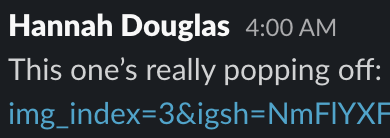
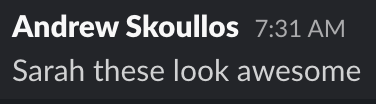
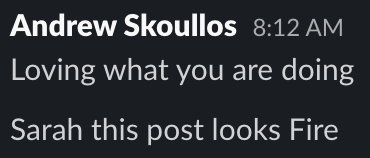
A peek into our Slack channel…


If Your socials are that person in the group project who does zilch, and lets the entire team down…
You need a partner who will drive tangible results for your business through original content, proven strategy and endless character.